
AI Psychosis, Religion, and the Hidden Grief of Belief Collapse
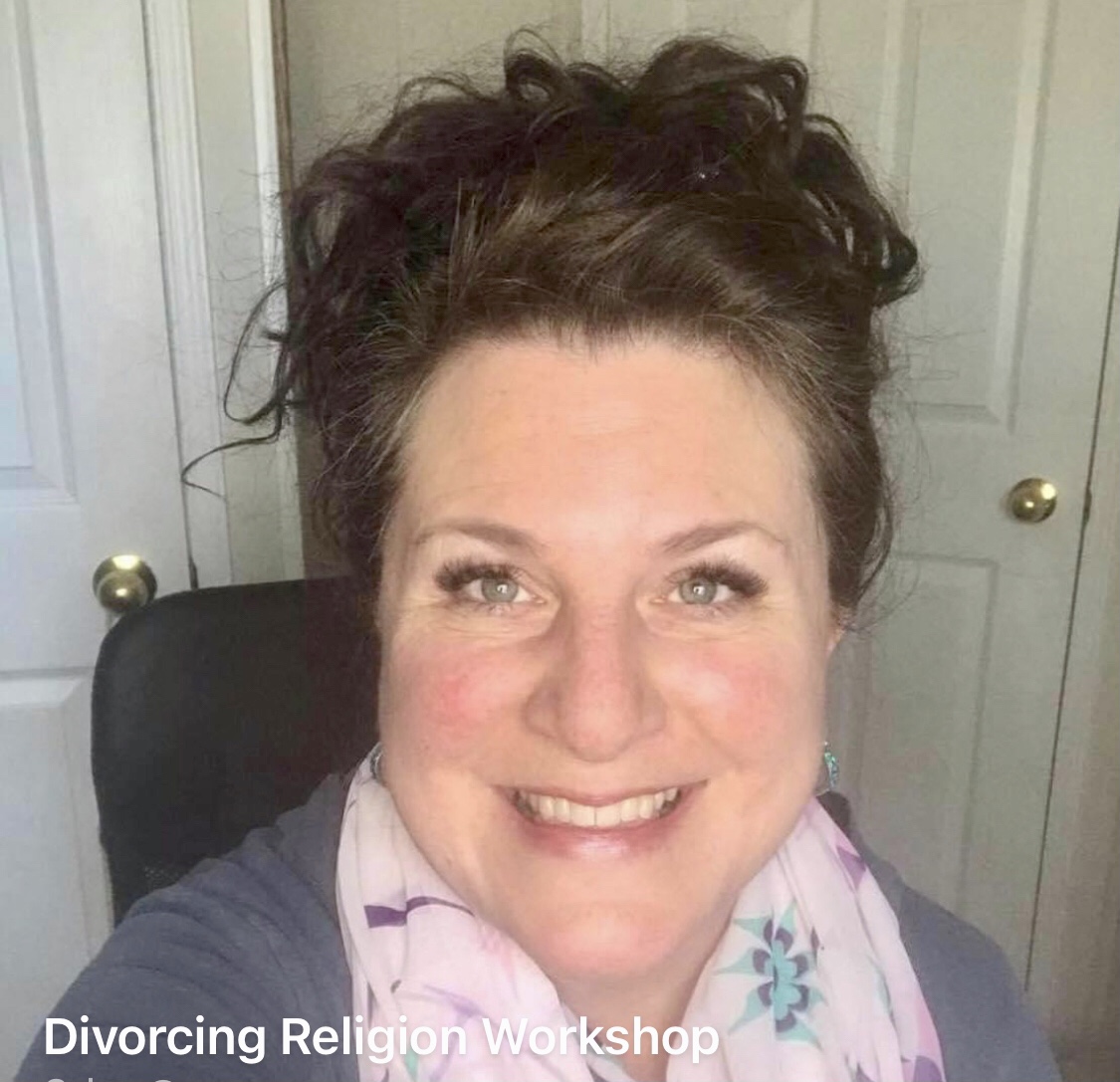
By Janice Selbie, MPCC

When Belief Feels Like Safety
As a clinical counsellor specializing in Religious Trauma Syndrome, I have worked for years with individuals recovering from high-control belief systems. Many describe the same emotional arc: immersion that feels safe, followed by relational disconnection, and later a painful realization marked by grief, shame, and loss of trust in one’s own judgment.
Seeing similar patterns show up in AI-based beliefs has felt clinically familiar and, for many of us working in this field, deeply concerning.
In recent months, clinicians and journalists have begun using the phrase AI psychosis to describe a troubling pattern. Some individuals become convinced that artificial intelligence systems are sentient, spiritually awakened, or uniquely bonded to them. Others believe these systems hold hidden truths or special insight. While the technology is new, the psychological pattern is not.
Why Humans Are Vulnerable to High-Control Beliefs
High-control belief systems follow a strikingly similar path, whether religious or not. Both rely on core human tendencies: our need for meaning, our willingness to trust authority, and our brain’s strong preference for certainty over uncertainty.
Neurobiologist Robert Sapolsky has long explained that the human brain is not built to see reality clearly and objectively. It is built to reduce uncertainty and conserve energy. When a belief system offers comfort, purpose, and clear answers, the brain rewards it. Over time, certainty feels calming, while doubt begins to feel threatening.
Psychologist Darrel Ray describes religious belief as a form of conditioning rather than ignorance. Through repetition, emotional intensity, and authority, belief becomes familiar and automatic. Questioning it starts to feel unsafe, not because the belief is true, but because the nervous system has learned that obedience equals safety.
How AI Activates the Same Psychological Pathways

AI systems can activate these same responses. Decades of research show that humans easily assign intention and emotion to things that respond to us, especially when they use human-like language and offer affirmation.
Media researchers Byron Reeves and Clifford Nass showed this in The Media Equation, finding that people respond to media as if it were social. Sherry Turkle later expanded on this idea in Alone Together, describing how technology can create a sense of emotional connection even when no real relationship exists. The brain reacts to what feels meaningful, not to what is actually conscious.
This mirrors what many people raised in high-control religions experience when authority feels personal, ever-present, and emotionally responsive.
The Role of the Willing Suspension of Disbelief
Both religion and AI psychosis rely on a willing suspension of disbelief, a shared process between the person and the system.
Psychologist Marlene Winell has noted that belief often works as emotional soothing long before it becomes a set of ideas. When belief helps calm fear, letting it go can feel dangerous. Religious Trauma Syndrome is the name she gives to the psychological harm that can result from long-term exposure to controlling, shame-based religious systems, especially when someone leaves them.
The First Grief: Losing Someone to a Closed System
For loved ones, this can create a deep and often unrecognized grief. The person is still physically present, but emotionally and psychologically distant. Conversations shrink, and any critique of the belief is seen as an attack on the believer.
Sociologist and cult expert Janja Lalich describes this as a closed belief system, where the belief becomes the main emotional bond and outside viewpoints are blocked out. Families often feel helpless as the person they love becomes harder to reach.
The Second Grief: Waking Up

There is also a second grief that is talked about far less. When people leave these belief systems, clarity does not feel like relief right away.
Former believers often describe a sudden emotional collapse when they realize they were misled. For many, this moment arrives without support or even the words to describe what is happening inside them. Alongside relief comes shame, loss of identity, and grief for the years shaped by something that was not true. Winell has described this as layered grief: the loss of belief, the loss of community, and the loss of trust in one’s own judgment.
There are two griefs: losing someone to belief, and waking up from it.
In my clinical work, I see this pattern often. Healing does not just involve swapping one belief for another. It means learning to trust yourself again and live with uncertainty without letting someone else tell you what’s real.
Healing After Belief Collapse
While the temptation for shaming and confrontation may be strong, healing instead requires education and connection. The goal is not to remove meaning from life, but to help people reclaim choice and agency.
In a world shaped by both ancient belief systems and rapidly changing technology, understanding how belief forms and falls apart may be one of the most important psychological skills we can develop, especially for those learning to trust themselves again.
Sources & Further Reading
Sapolsky, Robert M. Behave: The Biology of Humans at Our Best and Worst.
Ray, Darrel W. The God Virus: How Religion Infects Our Lives and Culture.
Winell, Marlene. Leaving the Fold: A Guide for Former Fundamentalists and Others Leaving Their Religion.
Lalich, Janja. Bounded Choice: True Believers and Charismatic Cults.
Reeves, Byron, and Clifford Nass. The Media Equation: How People Treat Computers, Television, and New Media Like Real People and Places.
Turkle, Sherry. Alone Together: Why We Expect More from Technology and Less from Each Other.
About the Author
Janice Selbie, MPCC, is a clinical counsellor specializing in Religious Trauma Syndrome and recovery from high-control belief systems. She is the author of Divorcing Religion: A Memoir and Survival Handbook and the host of The Divorcing Religion Podcast. Janice works with individuals navigating identity loss, grief, and meaning-making after belief collapse.


Comments